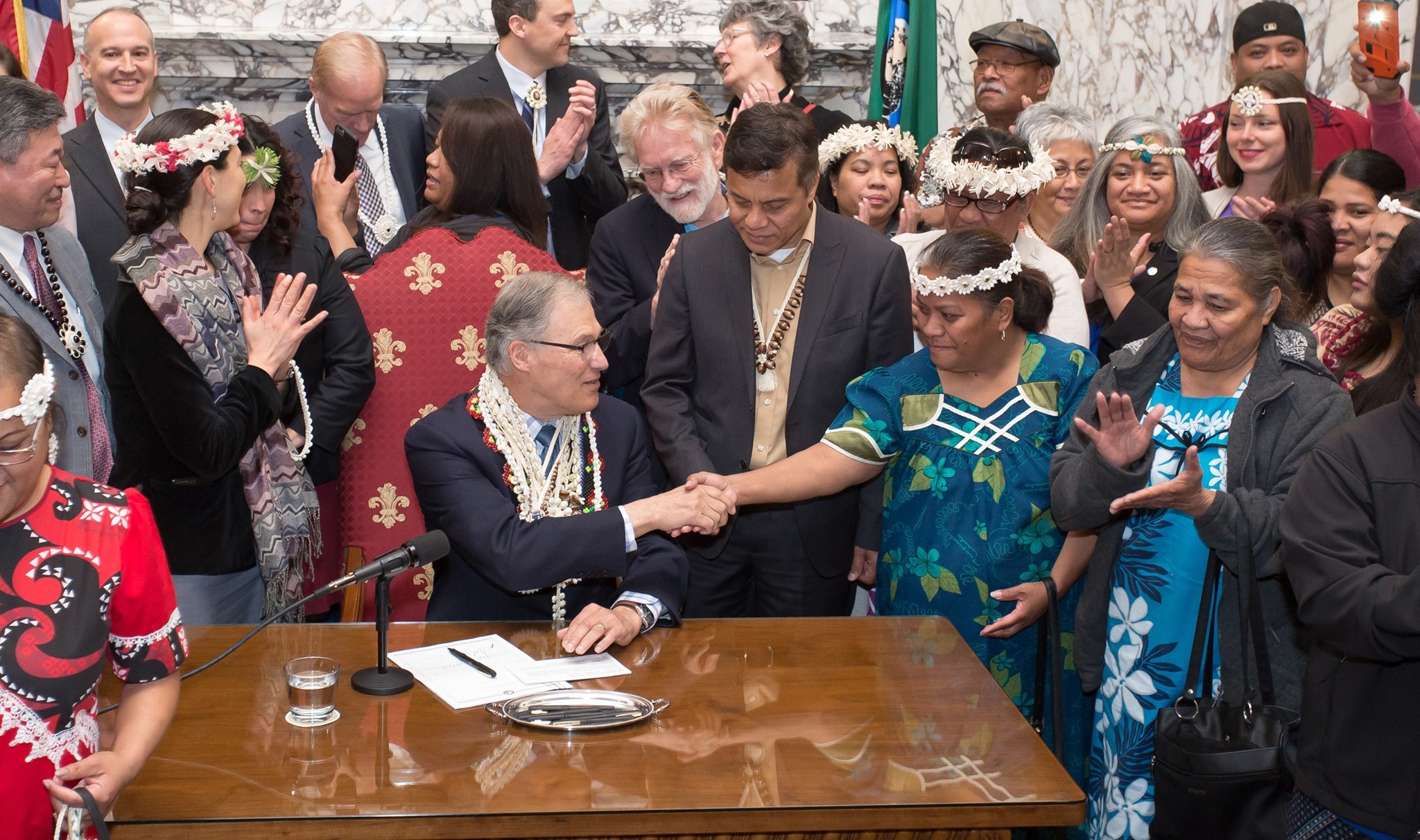
On March 22, 2018, Governor Inslee signed a bill, HB 1291 (2017-18): The COFA Islander Health Care Act, to expand health care coverage for Washingtonians from the Federated States of Micronesia, Republic of the Marshall Islands, and the Republic of Palau, the Pacific Island nations under the Compact of Free Association (COFA) with the United States.
Passed during Washington’s 2018 legislative session, House Bill 1291 was a landmark piece of legislation designed to bridge a critical gap in healthcare access for COFA citizens living in Washington.
Key Objectives and Provisions
The bill addressed the fact that, despite being legal residents who pay taxes and serve in the U.S. military, COFA citizens were ineligible for federally funded Medicaid due to the 1996 Welfare Reform Act.
-
Establishment of the COFA Premium Assistance Program: The bill directed the Washington Health Care Authority (HCA) to create a program that pays the monthly premiums for silver-level qualified health plans purchased on the health benefit exchange.
-
Out-of-Pocket Cost Coverage: In addition to premiums, the program was designed to cover cost-sharing requirements (such as copays and deductibles) for eligible individuals.
-
Eligibility Criteria: To qualify, an individual must be a Washington resident, a citizen of a COFA nation (Palau, Micronesia, or the Marshall Islands), and have an income below 133% of the Federal Poverty Level.
Why It Mattered
Before this bill, many COFA residents in Washington faced disproportionately high rates of chronic illness—including diabetes and heart disease—without the financial means to seek preventative care. HB 1291 recognized the unique “special status” of these residents and aimed to:
-
Improve Health Outcomes: By removing financial barriers to primary care.
-
Reduce Emergency Room Costs: Shifting care from expensive emergency departments to consistent, managed outpatient care.
-
Fulfill Moral Obligations: Acknowledging the historical relationship between the U.S. and COFA nations, particularly regarding the legacy of nuclear testing in the Pacific.
Note: This state-funded initiative served as a vital safety net until 2020, when the U.S. Congress finally restored federal Medicaid eligibility for COFA citizens nationwide. However, Washington’s proactive stance with HB 1291 established the state as a leader in Pacific Islander advocacy.