
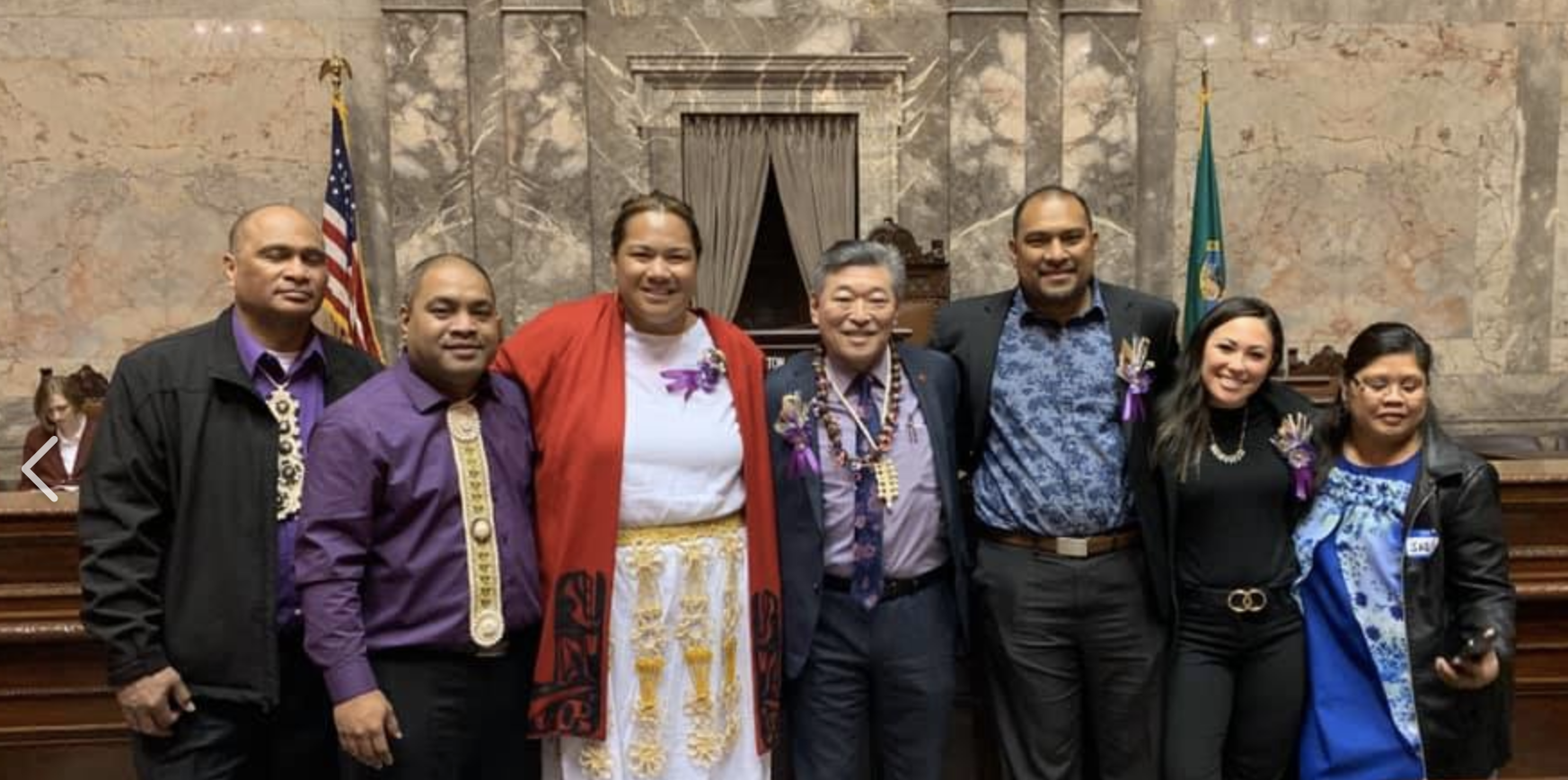
National Board & Staff

Mike Pangelinan, President
Pohnpei, FSM

Loyd Henion, Board Member / Lobbyist
Oregon

Bennie Moses-Mesubed, Admin Support
Palau
Who We Are
The COFA Alliance National Network (CANN) Action is a 501(c)(4) lobbying and advocacy organization committed to advancing policy solutions that honor the Compact of Free Association (COFA)—the unique treaty relationship between the United States and the Freely Associated States: the Federated States of Micronesia, the Republic of the Marshall Islands, and the Republic of Palau.
Through lobbying, coalition-building, and state and national advocacy, CANN Action works to protect the rights and well-being of COFA citizens living in the United States and its territories. The organization advocates for fair treatment, stronger access to essential services, and public policies that support COFA communities as they live, work, study, serve, and lead across the country.
The Compact of Free Association (COFA) is a special agreement between the United States and the Republic of Palau, the Republic of the Marshall Islands, and the Federated States of Micronesia. Under this agreement, citizens of these nations may live, work, and study in the United States, reflecting a long-standing and important relationship between the United States and these Pacific nations.
CANN Action is grounded in several basic truths:
1) COFA is a mutual-benefit treaty relationship that supports U.S. security interests in the Indo-Pacific, strengthens diplomatic partnerships, and upholds long-standing commitments in the Pacific.
2) COFA is a mutual-benefit treaty relationship that supports U.S. security interests in the Indo-Pacific, strengthens diplomatic partnerships, and upholds long-standing commitments in the Pacific.
3) COFA communities strengthen the United States every day through work, military service, caregiving, education, civic leadership, volunteering, and economic contributions
4) COFA households support local and state economies through payroll taxes, consumer spending, renting and homeownership, and, when residency rules apply, federal income taxes.
5) COFA-connected families are a growing civic presence, and many include U.S.-citizen relatives who vote and participate in community life
CANN Action exists to ensure that U.S. policy recognizes these contributions, honors treaty commitments, and advances justice, opportunity, and stability for COFA communities nationwide.
CANN
Our History
CANN was formed in 2014 with a few individuals both from the COFA and non-COFA island nations, who shared a passion to highlight the social and economic injustices that were experienced by the people of the three Pacific Island countries that have a unique Compact of Free Association treaty with the United States. These three island nations are the Federated States of Micronesia, Republic of the Marshall Islands and the Republic of Palau. Upon migrating to the United States, people from the COFA island nations residing in the United States were experiencing barriers and challenges that limited access to basic necessities including but not limited to healthcare, job opportunities, property and more.
Before CANN was formed, the leadership and founding members had all been associated, in one way or another, with existing organizations that were representing Asian and Pacific Islanders living in Oregon, but none of these were specifically organized around COFA. Prior to 2013, CANN’s founding members had already begun the work of restoring social and economic justice to Oregon’s COFA residents. The passage of HB 2517 reversed the one year only Driver’s License limit on Oregon’s COFA residents. Enactment of the bill meant that Oregon’s COFA residents could live here more freely, as a vital impediment to everyday life was removed.
The need to remove the Driver’s License and Health Care inequities for the COFA people was seen to be so urgent that the CANN founders saw that a 501c4 was preferred, as intentional, directed lobbying was needed in order to get reform laws passed. The goal was to concentrate efforts in Oregon before launching a national campaign. As a new organization, CANN understood that it was critical to work in unity with the other well-established organizations serving the Asian and Pacific Islanders. Working together with other organizations CANN was successful in garnering passage of the HB 4071 in 2016 (COFA Premium Healthcare Assistance program).
CANN has evolved over time and its founders and leadership represent the COFA community members with the following representation breakdown – 31% from Chuuk, 15% from the Marshall Islands, 8% from Palau, 31% Pohnpei, and 15% USA – Oregon. The significance of this representation is that CANN Board lived experiences reflect those of the community and they are members of the community. The team’s cultural experiences inform how CANN authentically engage in work and uplift the voices of the COFA nations living in the various communities within the USA. In 2022, CANN c4 established a CANN Foundation c3 and expanded its chapters to include an Oregon Chapter. With this new addition, CANN now has chapters in Arizona, Texas, Eastern Oregon, Washington, and Oregon.


Our Name
“COFA” is an acronym for Compact of Free Association, a reciprocal treaty established between The Republic of Palau (ROP), The Republic of the Marshall Islands (RMI), and the Federated States of Micronesia (FSM) and the United States (US). The treaty took effect in the 1980’s and allows the United States to operate armed forces in our states, demand land for operating military bases, and grant or withhold permission to other countries’ militaries to operate on our lands.
It also created a unique immigration status for people from COFA nations: we can travel to, live, and work in the United States without visas or green cards. All citizens of RMI, Palau, and the FSM can now posseess dual citizenship with the United States.
Many of COFA citizens and their children proudly serve in the United States military, and do so at a higher rate per capita than Americans. And originally, the treaty allowed those of us who were income-eligible to access federal assistance programs such as Medicaid. Yet, 1996 federal welfare reform law deemed us ineligible for Medicaid and federal assistance programs, creating waves of barriers to health and opportunity. Since 2024 with advocacy by COFA-serving organizations and with support from members of US Congress, COFA citizens can now access Medicaid.